

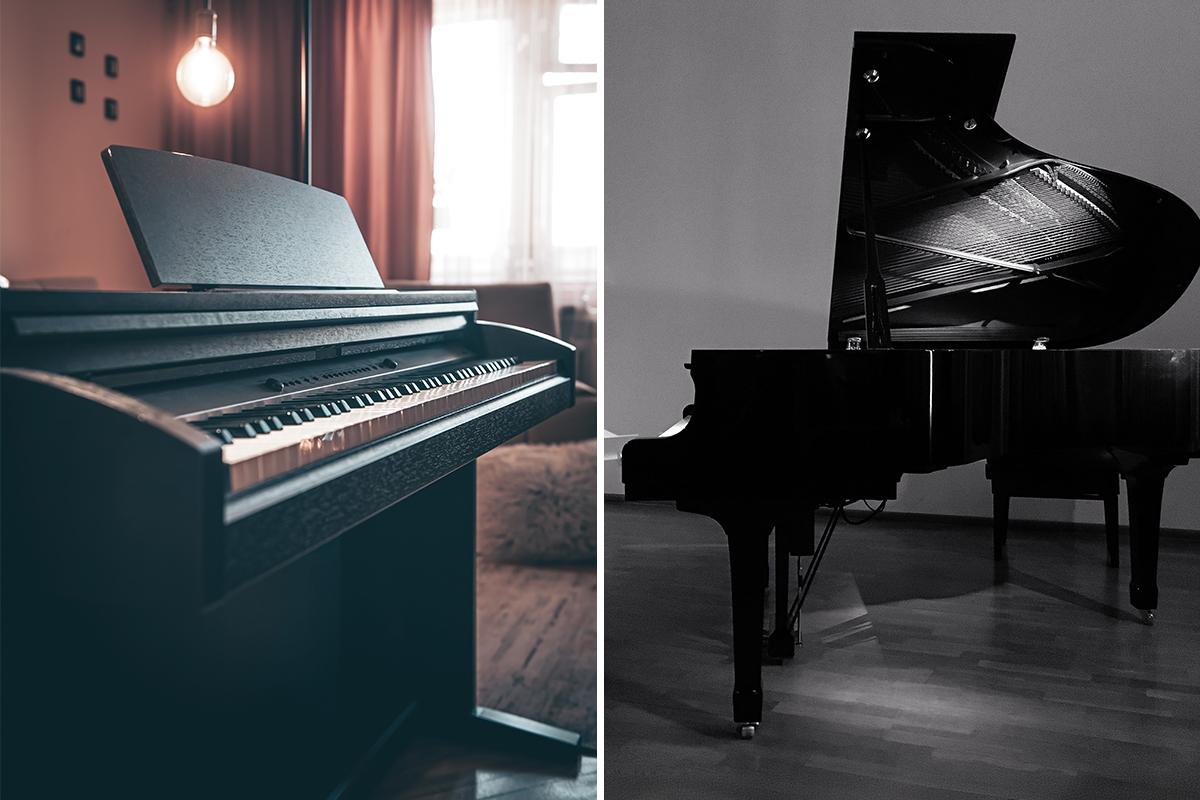
Choosing between a digital piano and an acoustic piano is one of the most common questions students and parents ask when starting piano lessons. Both instruments have their advantages, and either can be suitable depending on the student’s goals, space, and budget. For students taking piano lessons in Winnipeg, understanding the differences between these two instruments can help families make a decision that supports consistent practice and long-term musical development.
What Is an Acoustic Piano?
An acoustic piano produces sound mechanically. When a key is pressed, a hammer strikes a string inside the instrument, creating the sound that we hear. This design has remained largely unchanged for hundreds of years and is responsible for the rich tone and expressive control associated with traditional piano playing.
Acoustic pianos come in two main forms: upright pianos and grand pianos. Upright pianos are the most common choice for homes and music studios because they require less space, while grand pianos are typically found in concert halls and performance venues.
Pros of Acoustic Pianos
Authentic sound and tone
Acoustic pianos produce a natural sound that many musicians consider unmatched. The vibrations of the strings and soundboard create a rich tone that responds dynamically to the player’s touch.
Superior key action
The mechanical hammer action of an acoustic piano provides excellent control over dynamics and expression. Students can learn to play softly, loudly, and with greater nuance.
Long lifespan
A well-maintained acoustic piano can last decades. Many pianos remain playable for 40–50 years or more with regular tuning and maintenance.
Stronger technique development
Because acoustic pianos require proper finger strength and control, they can help students develop solid technique during piano lessons.
Cons of Acoustic Pianos
Cost
Acoustic pianos are usually more expensive than digital pianos, especially when purchasing new.
Maintenance
They require regular tuning, usually once or twice a year, as well as occasional servicing.
Size and weight
Acoustic pianos are large and heavy, which can make moving them difficult. They also require adequate space in the home.
Volume control
Unlike digital pianos, acoustic pianos cannot be played silently, which may be a concern for apartments or shared living spaces.
What Is a Digital Piano?
A digital piano produces sound electronically. When a key is pressed, sensors trigger recorded samples of real pianos through built-in speakers. Modern digital pianos can closely replicate the sound and feel of an acoustic piano, particularly those with hammer-weighted key actions.
Digital pianos are designed to simulate the playing experience of an acoustic piano while offering additional convenience features.
Pros of Digital Pianos
Affordability
Digital pianos are generally less expensive than acoustic pianos, making them a popular option for beginner students.
No tuning required
Because the sound is generated electronically, digital pianos never need tuning.
Volume control and headphones
Students can practice quietly using headphones, which is ideal for households where noise may be an issue.
Compact and portable
Digital pianos are usually lighter and more compact than acoustic pianos, making them easier to move and better suited for smaller spaces.
Additional features
Many digital pianos include features such as recording capabilities, metronomes, multiple instrument sounds, and connectivity with learning apps.
Cons of Digital Pianos
Less authentic sound
Although digital pianos have improved significantly, some players still feel that they lack the natural resonance and complexity of an acoustic instrument.
Variable key action quality
Not all digital pianos have properly weighted keys. Lower-cost models may feel too light and may not adequately prepare students for playing an acoustic piano.
Shorter lifespan
Electronic instruments may eventually require replacement as technology evolves or components wear out.
Which Piano Is Best for Students?
For many beginners, a digital piano with a good hammer-weighted action can be an excellent starting instrument. It offers affordability, convenience, and a realistic playing experience that supports early skill development.
However, if space and budget allow, an acoustic piano provides the most authentic playing experience and can be a long-term investment for serious students.
Music teachers often recommend avoiding very basic keyboards with unweighted keys for long-term study. While they may be useful for experimentation or casual playing, they usually do not provide the resistance and control needed to develop proper piano technique.
Supporting Piano Lessons at Home
The most important factor for success in piano lessons is consistent practice on an instrument that feels comfortable and responsive. Whether students practice on a digital or acoustic piano, having a reliable instrument at home allows them to reinforce what they learn during their lessons.
For families considering piano lessons in Winnipeg, discussing instrument options with a music teacher can help ensure the instrument chosen supports the student’s progress and enjoyment.
With the right instrument and supportive instruction, students can develop the skills, confidence, and musical expression that make learning the piano such a rewarding experience.