

Different touch – Most music educators would agree that a 61-note keyboard is not a suitable long-term instrument to study the piano, mainly due to the difference in touch. Although the key size is the same, the touch, also referred to as the action, is very different on a keyboard compared to a piano. A keyboard has a light touch with a simple spring action similar to an organ, as opposed to a much heavier weighted action, which offers much more control when playing, especially when playing fast or playing softly.
When is a 61-note keyboard suitable to learn on?
A 61-note keyboard can be suitable to start lessons on if you do not have space for an 88-note piano, if you already own a keyboard and want to try lessons before you buy a piano or if you only want to play easy/beginner level music for fun and enjoy the different sounds and rhythms that a keyboard offers. Keyboards can be used when playing in a band or with other musicians.
Keyboards are also less expensive than pianos however, you can find an entry-level piano with an adequate action for about $1,000.00.
Recommended starter pianos for $1,000.00
If you are on a budget and looking to buy your first piano, look to spend around $1,000.00 to find a piano with an adequate hammer-weighted action, which piano instructors recommend.
One option is to look for a good used acoustic or digital piano. Yamaha and Kawai are considered very reliable brands for both acoustic and digital pianos, and Roland is a good quality digital piano.
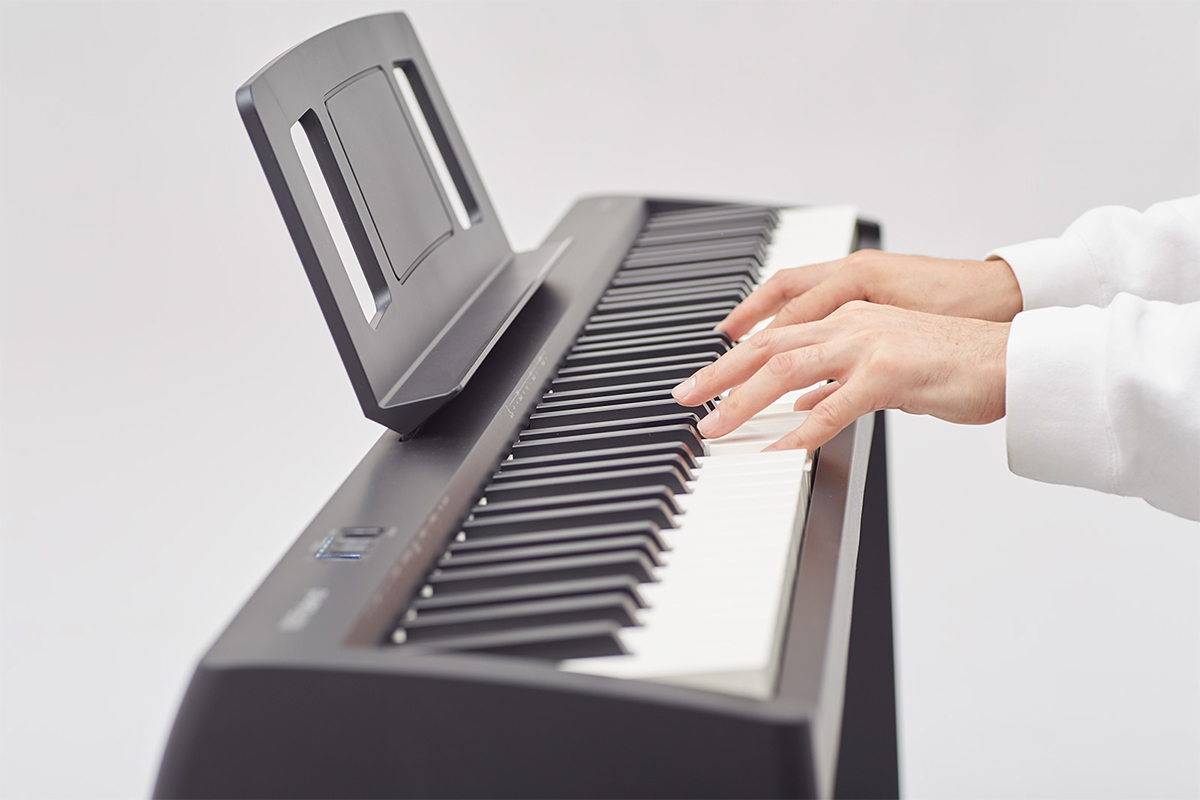
There are several entry-level digital pianos in the $500 – $800 range on the market, but many do not have a good hammer-weighted action; they will have a lighter action that would not be suitable for long-term study. A couple of recommendations for digital pianos with good weighted actions would be the Roland FP-10 ($899.00 CDN) and the Kawai ES120 ($1,099.00 CDN) digital pianos.
The Roland FP-10 features the PHA-4 Standard 88-note hammer-action keyboard, widely considered the best in its price range. It offers a realistic, weighted feel with escapement, and ivory-feel keytops that simulate an acoustic piano by being heavier in the low end and lighter in the high end.
The Kawai ES120 features the new Responsive Hammer Compact (RHC) keyboard action, which has been developed to reproduce the distinctive touch of an acoustic grand piano. Its springless technology and sturdy construction deliver consistent upward and downward motion for a smooth, natural, and highly authentic piano playing experience. Designed along the principles of the RHIII action, the RHC action delivers superb touch in a more compact and lightweight package, making it ideal for instruments such as the ES110 portable digital piano.