

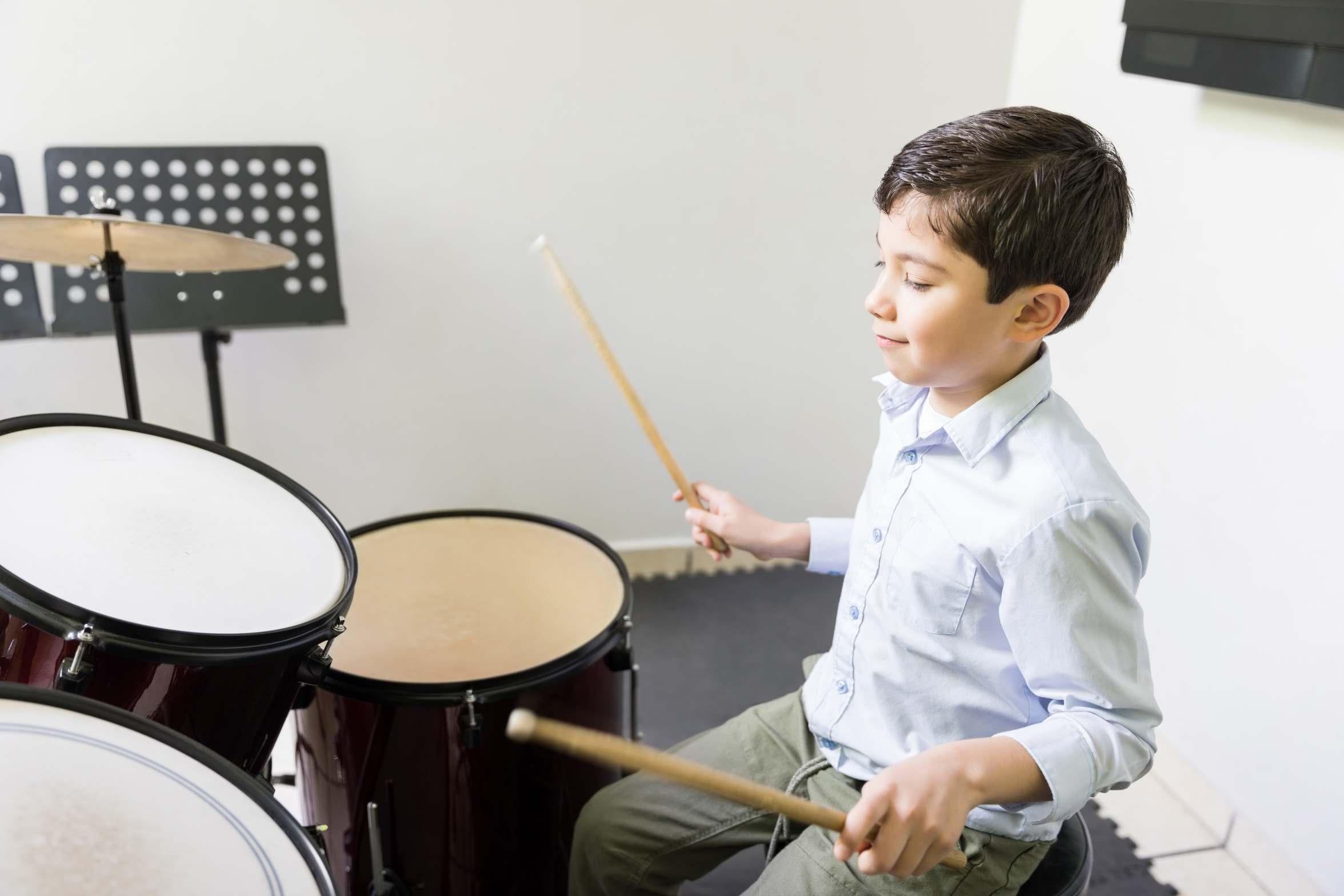
Choosing a first drum kit involves more than deciding which one sounds best. Families also need to consider practice volume, available space, maintenance and how the instrument feels to play.
The short answer: Electronic drums are often practical for home practice because they offer headphone volume control and can take up less space. Acoustic drums provide a natural sound and physical response. Either can support a beginner when the kit is properly set up and the student receives good instruction.
Why choose electronic drums?
Electronic kits allow students to practise through headphones and adjust the amplified sound. Depending on the model, they may include a metronome, play-along tracks and multiple drum sounds. Compact models can be easier to accommodate in a bedroom or shared home.
They are not completely silent. Drumsticks still strike rubber or mesh pads, and the kick pedal can transmit vibration through a floor. Thoughtful placement and suitable isolation products may help, but headphones do not eliminate impact noise.
Why choose acoustic drums?
Acoustic drums produce sound directly from the drumheads and cymbals. They offer the physical response, dynamic range and sound students encounter in many rehearsal and performance settings.
The main challenges are volume, space and tuning. Hearing protection and responsible volume management are important, and families may need to plan practice times around other people in the home.
Which feels more realistic?
Acoustic drums provide the direct response of drumheads and cymbals. Electronic kits, especially those with mesh heads, can also offer a useful playing experience, although their response differs from an acoustic setup.
Entry-level electronic kits vary considerably in pad size, sensitivity and pedal design. A beginning drummer needs a setup that supports good posture, comfortable reach and consistent rebound. A teacher can help arrange either type correctly and explain how to adapt between them.
Compare the equipment and ongoing costs
When comparing prices, check what is included rather than looking only at the advertised kit price.
Acoustic kits may require separate cymbals, hardware or pedals, depending on the package. Over time, students may also need replacement drumheads and sticks.
Electronic kits require power and headphones or amplification. Cables, pads, pedals and electronic components may eventually need maintenance or replacement.
For either option, allow for a suitable drum throne, sticks and any necessary headphones or hearing protection. Used equipment can offer value, but inspect it for wear, missing components and proper operation before buying.
Match the kit to the practice environment
In a detached home with a suitable practice area, an acoustic kit may be manageable. In an apartment or shared home, electronic drums may be more practical, although pedal vibration and pad noise still need consideration.
Measure the complete setup, including the drummer’s seat and space to move comfortably. Check household or building noise restrictions before committing to a purchase.
The best kit is one the student can practise on regularly. An impressive instrument offers limited value if noise or space restrictions prevent it from being played.
Frequently asked questions
Are electronic drums good for beginners?
Yes. Electronic drums can help beginners develop timing, coordination and basic technique. Look for responsive pads, a comfortable layout and pedals that support the skills the teacher plans to introduce.
Can you learn drums on an electronic kit?
Yes. Many core skills transfer between electronic and acoustic drums, although students may need time to adjust to differences in rebound, dynamics and cymbal response.
Are acoustic drums too loud for home practice?
They can be, particularly in shared homes or apartments. Discuss practice times, hearing protection and volume-control options with the teacher before choosing a setup.
How much space does a beginner drum kit need?
The space depends on the model and arrangement. Measure the full setup, including the seat, pedals and room for the student to move comfortably. Electronic kits can be compact, but some occupy as much space as smaller acoustic kits.
Does a beginner need a complete drum kit immediately?
Not always. Sticks and a practice pad can support early work on grip, timing and basic sticking exercises. They cannot fully replace practice on a kit, so ask the instructor what equipment is needed for the planned lessons.
Get guidance before choosing your first drum kit
The right choice depends on the student’s goals, budget and practice environment. Before buying, speak with a teacher about the equipment that will support the first stages of learning.
Academy of Music offers drum lessons to help students develop timing, coordination, reading and technique. Explore our music lesson options in Winnipeg, Edmonton and Saskatoon, then contact us to confirm drum teacher availability and lesson formats in your area.